Stake Mines board analysis versus blind guessing and why reading the board wins
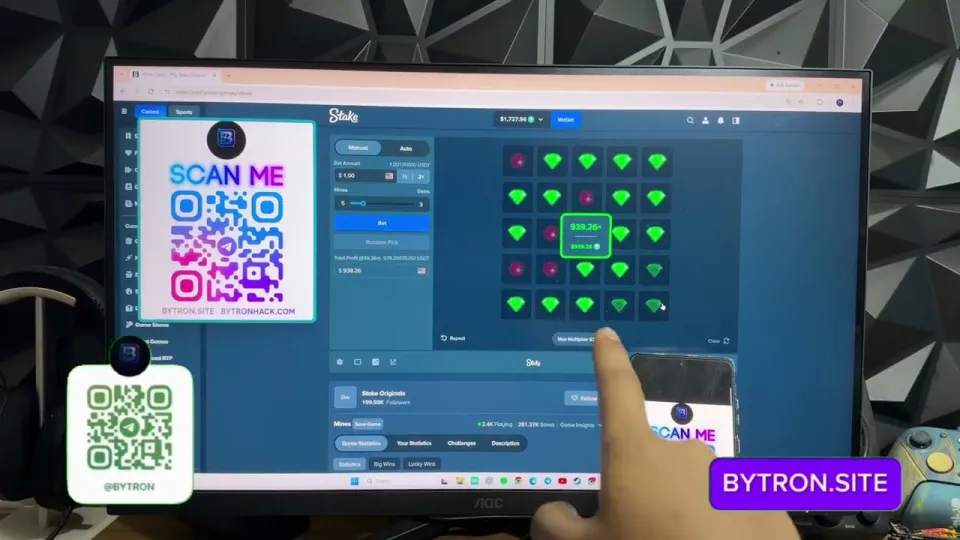
Video: How I Won Using Stake Mines Hack – Board Analysis Shown
· based on the channel gabruel
Key takeaways
- Stake Mines runs on a provably fair system where each round's mine positions are fixed before the first tile is revealed.
- A 5x5 board holds 25 tiles; with 3 mines set, the first pick carries a 22/25 chance of being safe.
- Blind guessing ignores payout multipliers, which rise with each safe pick but fall as mines are added.
- The gabruel video breakdown shows opening reads, selection order and later-stage choices across recorded sessions.
- No board read changes the odds of a provably fair round; it only changes how consistently you size bets and cash out.
Stake Mines is a provably fair game, so no board analysis can change the location of the mines in a given round; what a structured board read actually does is decide how many mines you set, which tiles you open and when you cash out, and that discipline beats blind guessing because it controls variance and payout math rather than pretending to predict hidden tiles. The approach shown in gabruel's session breakdown — opening reads, selection order, later-stage choices — is a decision framework, not a hack, and understanding the difference is what separates a repeatable method from a lucky screenshot.
What the Stake Mines hack claim actually describes
The "hack" in the gabruel video title is a board analysis routine, not a code exploit or a prediction tool. Stake Mines runs on a provably fair system: the mine positions are generated from a server seed, a client seed and a nonce before the first tile is opened, and the round can be verified afterwards with those values. Nothing a player does during the round changes where the mines sit.
What the recorded sessions show is a repeatable process applied live: an opening read of the board, a fixed selection order for the tiles, and a set of later-stage choices about when to stop. The video description frames it the same way — opening reads, selection order, later-stage choices — and invites viewers to study the rounds rather than copy a single result.
That distinction matters for anyone searching for a "mines hack" or a "mines method." A strategy can improve how you size bets, how many mines you choose and when you take profit. It cannot beat the house edge baked into the multipliers. Treat any claim otherwise as marketing.
Why a structured board read beats blind guessing
Blind guessing ignores the two numbers that decide long-run results: the multiplier and the probability of the next pick. On a 5x5 board there are 25 tiles, and the safe-tile probability after each pick is fixed by simple arithmetic.
- With 3 mines set, the first pick is safe with probability 22/25, or 88%.
- Each additional safe pick shrinks the safe pool: 21/24, then 20/23, then 19/22, and so on.
- The payout multiplier rises with every safe pick because the risk of the next one increases.
- Adding mines raises the multiplier faster but drops the safe-tile probability on the first pick — with 5 mines it is 20/25, or 80%.
A player who guesses randomly ignores all of this and typically keeps opening tiles past the point where the added risk outweighs the added payout. A player who reads the board sets a target multiplier before the round starts, chooses a mine count that matches their bankroll, and cashes out on plan. That is the whole edge: not knowing where the mines are, but knowing when to stop.
The opening read and selection order in the gabruel sessions
The opening read is the part of the method that happens before any tile is clicked. In the recorded sessions the process is consistent: choose the mine count, decide the number of picks planned for the round, and fix the order in which tiles will be opened so the decision is not made emotionally mid-round.
Selection order does not change the odds — every unrevealed tile has the same probability of hiding a mine — but a fixed order removes hesitation and prevents the common habit of jumping to a "lucky-looking" tile after a loss. The video shows this applied across multiple sessions so the decision points are easy to track, which is the useful part for anyone studying a Stake Originals strategy.
Practical takeaways from that structure:
- Pick a mine count and stick to it for a full session rather than changing it after every loss.
- Decide the target multiplier before the first click and cash out when it is reached.
- Keep the tile order fixed so the round follows a plan rather than a reaction.
- Record sessions, as the video does, because patterns in your own decisions are easier to spot on review than in the moment.
Later-stage choices and cashout discipline
The later-stage choice is where most Mines sessions are won or lost, because the multiplier climbs fastest exactly when the remaining safe tiles are fewest. After several safe picks the next-tile risk is materially higher than at the start, and the payout reflects that — a large multiplier on screen is compensation for real risk, not free money.
The disciplined pattern is to set the cashout target in advance, take it, and start a new round rather than pushing for one more tile. A common alternative is partial profit-taking: cash out the bulk of a round at a moderate multiplier and leave a small stake running. Both approaches reduce the chance that a single late pick erases a session's gains.
Bankroll sizing belongs here too. If a session is planned around a fixed number of rounds at a fixed base bet, a losing streak is survivable; if bets are doubled after losses, the variance that Mines is designed to produce will end the session early. The board analysis in the video is only meaningful when it sits on top of stable stake sizing.
Provably fair verification and what it proves
Stake Mines rounds can be verified after the fact, and that verification is the honest answer to any hack claim. Each round uses a server seed, a client seed and a nonce; the player can change the client seed, and the server seed hash is published in advance so the outcome can be checked once the round is complete.
Running the verification on a few rounds shows the mine positions were fixed before play began. That rules out any method that claims to read hidden tiles in real time. What remains is the legitimate toolkit: mine count, number of picks, cashout target and bet size. Anyone selling a "mines hack" that promises to reveal tiles is selling something the provably fair system makes impossible.
Common mistakes that sink a Mines session
The most expensive mistake is chasing a loss by raising the mine count and the bet at the same time, which multiplies both risk and variance in a single move. The second is treating a hot streak as evidence that the board is predictable; it is not, and the next round is independent of the last.
Other frequent errors:
- Opening one tile too many out of curiosity after the cashout target was already reached.
- Playing without a session limit on rounds or losses.
- Copying a tile pattern from a video without copying the stake sizing and stop rules that made it survivable.
- Judging a method by a single winning session instead of a sample of dozens of rounds.
Summary
Stake Mines rewards a plan, not a prediction: the board analysis approach shown in gabruel's breakdown works because it fixes the mine count, the selection order and the cashout target before the round starts, while blind guessing leaves every decision to the moment. The provably fair system guarantees the mines cannot be read in advance, so the only controllable variables are stake size, picks and discipline. gabruel's video breakdown is a useful study aid precisely because it records the decision points across sessions rather than showing a single result. Watch it for the process, verify a few rounds yourself, and judge the method on a large sample.
Questions & answers
Is there a real Stake Mines hack that reveals where the mines are?
No. Stake Mines is provably fair: mine positions are fixed from the server seed, client seed and nonce before the first tile is opened, and each round can be verified afterwards. Any tool or method claiming to reveal hidden tiles in real time contradicts that system. What the gabruel video calls a hack is a board analysis and decision routine, not a prediction tool.
Does the tile selection order change the odds in Stake Mines?
No. Every unrevealed tile has the same probability of hiding a mine, so the order you click does not change the math. A fixed selection order is still useful because it removes hesitation and stops you from improvising after a loss, which is the practical reason the recorded sessions use one.
How many mines should I set for a Stake Mines session?
There is no universally best number; it depends on your bankroll and target multiplier. With 3 mines the first pick is safe 88% of the time, while 5 mines drops that to 80% but raises the multiplier faster. The key is to pick one mine count and keep it for the whole session instead of changing it after losses.
What is the biggest mistake players make in Stake Mines?
Chasing losses by raising both the mine count and the bet at the same time, which multiplies risk and variance in one move. The second most common error is opening one extra tile after the cashout target was already reached, turning a planned win into an unnecessary gamble.
Source: How I Won Using Stake Mines Hack – Board Analysis Shown · Markdown version